Birth Conditions

Congenital Conditions in Plastic Surgery: Current Concepts in Diagnosis and Management
Congenital anomalies affect approximately 3–5% of live births and represent a significant source of lifelong functional, aesthetic, and psychosocial impact. Plastic surgeons play a central role in the multidisciplinary care of these conditions, with expertise that extends beyond reconstruction to include long-term follow-up, growth monitoring, functional restoration, and improvement of quality of life.
Over the past decade, advances in imaging, genetics, microsurgery, virtual surgical planning, and outcome measurement have significantly improved care. Today, treatment is highly individualized and focuses on balancing function, appearance, facial and skeletal growth, and overall well-being.
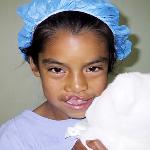
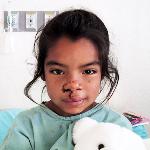
Cleft lips or palates
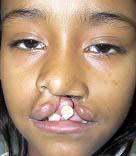
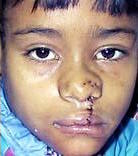
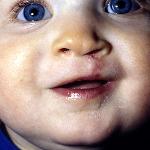
Cleft lip and palate are among the most common congenital craniofacial conditions. They occur when the lip and/or palate do not fully form during early pregnancy, leading to an opening that can affect feeding, speech, hearing, dental development, and facial growth.
Treatment Approach
Care is provided by a multidisciplinary team that may include plastic surgeons, ENT specialists, orthodontists, speech therapists, audiologists, pediatricians, and psychologists.
Treatment typically includes
- Surgical repair of the lip and palate in early childhood
- Speech therapy to support language development
- Dental and orthodontic care to guide tooth and jaw alignment
- Hearing monitoring and treatment when needed
While the timing of surgeries may vary depending on the child, the main goals of treatment are to restore normal feeding and speech, improve facial symmetry, and support healthy facial growth. Modern techniques such as improved nasal correction, presurgical orthopedics, and long-term follow-up protocols continue to enhance outcomes.
 |
 |
 |
 |
 |
 |
Craniosynostosis
Craniosynostosis occurs when one or more of the skull sutures close too early, affecting the shape of the head and, in some cases, brain growth.
Treatment Approach
Management depends on the child’s age, the sutures involved, and whether the condition is part of a syndrome.
Treatment options include:
- Minimally invasive endoscopic surgery in selected infants
- Open cranial vault reconstruction for more complex cases
- Helmet therapy in some postoperative or mild cases
Early diagnosis is important, as treatment during infancy often leads to better outcomes. The goals are to correct skull shape, allow normal brain growth, and prevent complications related to increased intracranial pressure.
Vascular Anomalies
Vascular anomalies include a wide range of conditions involving abnormal blood vessels. These are broadly divided into vascular tumors (such as hemangiomas) and vascular malformations.
Treatment Approach
Diagnosis is guided by the ISSVA classification system, which helps determine the correct treatment pathway.
Common treatments include:
- Medications such as propranolol for infantile hemangiomas
- Laser therapy for superficial lesions
- Sclerotherapy or embolization for vascular malformations
- Surgical removal in selected cases
- Targeted medical therapies (e.g., sirolimus) for specific genetic mutations
Care is often provided through specialized vascular anomaly clinics involving plastic surgeons, dermatologists, interventional radiologists, hematologists, and geneticists.
Congenital Hand and Upper Limb Differences
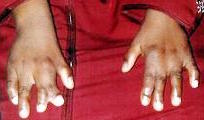
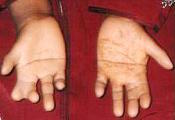
Congenital hand differences include conditions such as extra fingers (polydactyly), fused fingers (syndactyly), and underdeveloped or missing structures.
Treatment Approach
Treatment is highly individualized and focuses on improving hand function and supporting normal development.
Options may include
- Surgical separation or reconstruction of fingers
- Correction of bone and soft tissue differences
- Reconstructive procedures for complex limb differences
- Occupational therapy to improve strength, coordination, and function
Early therapy and family education are essential parts of care, helping children develop independence in daily activities.
 |
 |
Obstetrical Brachial Plexus Injury
This condition occurs when the nerves controlling the arm are stretched or injured during birth, leading to weakness or loss of movement in the shoulder, arm, or hand.
Treatment Approach
Many infants recover with observation and therapy alone. However, some require surgical intervention.
Treatment options include:
- Nerve repair, grafting, or nerve transfers in early infancy
- Tendon transfers or bone procedures later in childhood if needed
- Ongoing physiotherapy and occupational therapy
Early assessment is important to determine which children may benefit from surgery. The goal is to restore as much arm function as possible and support long-term independence.
Microtia and Congenital Ear Differences
Microtia is a condition where the external ear is underdeveloped or absent. It may also be associated with hearing loss.
Treatment Approach
Management is tailored to each child and may include:
- Hearing evaluation and bone-conduction hearing devices
- Ear reconstruction using rib cartilage or synthetic frameworks
- Prosthetic ear options for selected patients
- Staged surgical reconstruction when appropriate
Treatment is usually planned during childhood or early adolescence, depending on growth and family preferences.
Craniofacial Microsomia and Syndromic Conditions
Craniofacial microsomia affects the development of the jaw, ear, and surrounding facial structures. It can vary widely in severity.
Treatment Approach
Care is long-term and multidisciplinary, often including:
- Jaw lengthening procedures (distraction osteogenesis)
- Orthognathic (jaw) surgery
- Ear reconstruction
- Facial nerve or soft tissue reconstruction
- Orthodontic treatment and airway management
The treatment plan is adjusted as the child grows to ensure both functional and aesthetic improvement.
Congenital Melanocytic Nevi
These are pigmented birthmarks present at birth that vary in size and appearance.
Treatment Approach
Not all lesions require surgery. Management depends on size, location, and risk factors.
Options include
- Regular monitoring and skin surveillance
- Surgical removal in selected cases
- Tissue expansion and staged reconstruction for larger lesions
The decision to treat is individualized, balancing medical risk, cosmetic concerns, and family preference.
Emerging Advances in Care
Modern congenital plastic surgery continues to evolve with new technologies, including:
- 3D imaging and virtual surgical planning
- 3D printing for surgical models and implants
- Genetic testing and precision medicine approaches
- Targeted drug therapies for vascular anomalies
- Improved outcome tracking using patient-reported measures
- These innovations are helping improve both surgical precision and long-term results.
Importance of Early Evaluation
Early referral to a specialist is essential for many congenital conditions. Timely assessment allows for:
- Accurate diagnosis
- Early treatment when needed
- Coordinated multidisciplinary care
- Genetic counselling when appropriate
- Better long-term functional and developmental outcomes
Many conditions require staged treatment over several years, making long-term follow-up an important part of care.
Conclusion
Congenital plastic surgery is a highly specialized field focused on restoring function, improving appearance, and supporting normal growth and development. With advances in surgical techniques, imaging, genetics, and multidisciplinary care, outcomes for children born with congenital differences continue to improve.
The ultimate goal of treatment is to help each child achieve their fullest potential in health, function, and quality of life.